
If you’ve written Baltimore off, I need you to sit with me for a minute.
I know the headlines. I know the frustration. I know the disappointment.
But before you reduce Baltimore to statistics and soundbites, let me tell you what she was, and what she still can be.
I grew up in South Baltimore, back when neighborhoods were neighborhoods, not brands. When community wasn’t a buzzword, it was simply how we lived.
My mother taught us that if we were outside washing our own steps, we washed our neighbor’s too. Not because anyone asked. That was the expectation.
Neighbors watched each other’s kids. We ran barefoot through the alleys, collecting stubbed toes and splinters, but we always came home safe. Somebody’s mom always had an eye out. Somebody’s grandmother always knew your name.
I had the best childhood there. I wouldn’t trade it for anything.

Our house sat close to the harbor. Close enough that we could almost see the water from our backyard, if it weren’t for the Baltimore Museum of Industry blocking the view, lol.
We didn’t need a perfect view to feel it.
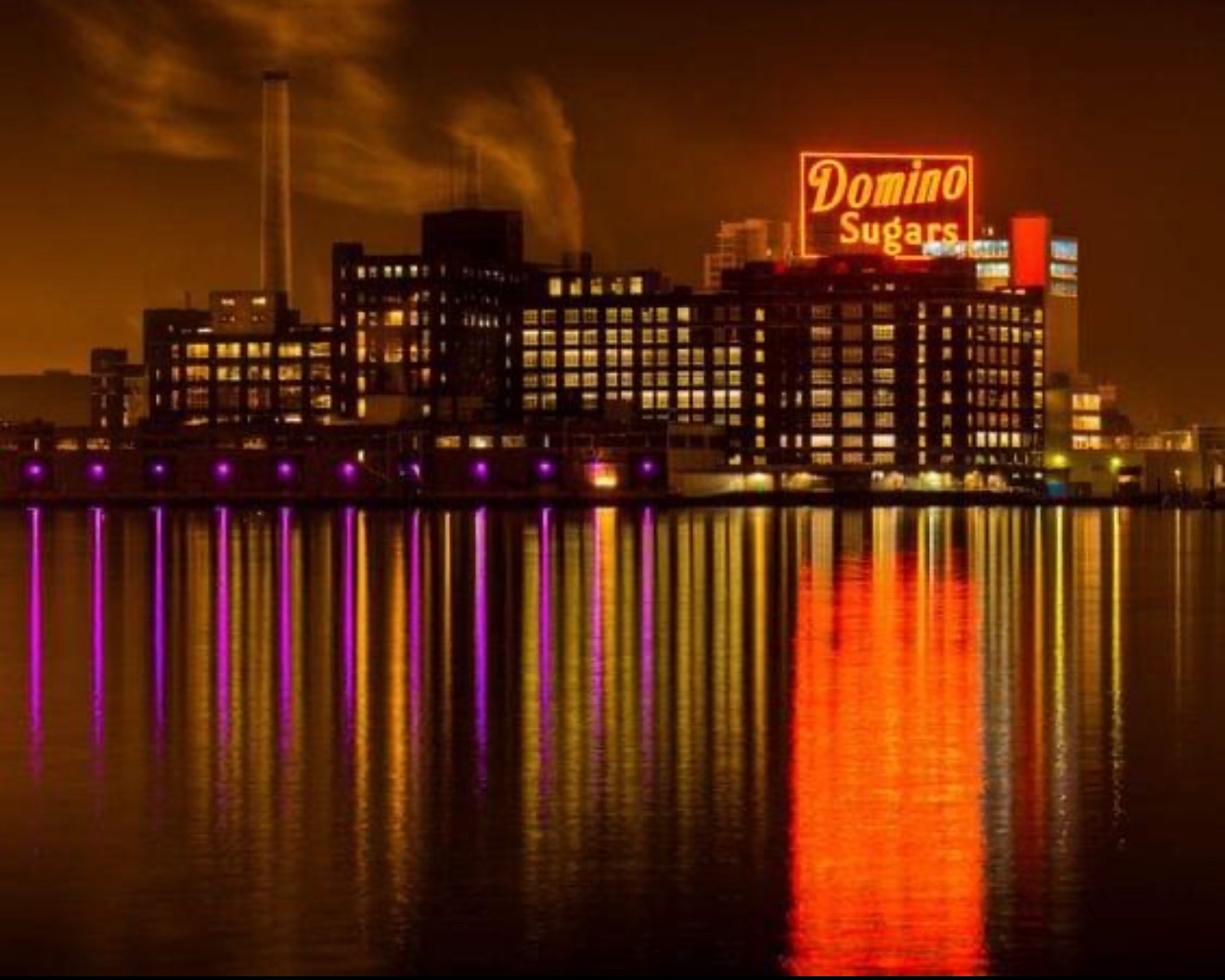
We could see the iconic Domino Sugar sign from our bathroom window. That glowing red landmark wasn’t just advertising, it was orientation. It reminded you that you lived in a working city.
And from that same window, we watched a grain elevator burning on fire. I stood there watching flames and smoke stretch over the water…to us kids, it felt enormous, like the whole city was lit up.
You grow up fast when you live that close to industry. Cities build. Cities burn. Cities rebuild.
South Baltimore was built by immigrants, especially German families who settled near the water because that’s where the work was.
Shipbuilding.
Steel.
Refineries.
Warehouses.
Dock labor.
Most of the men on my dad’s side of the family worked the docks or at Domino Sugar.
The harbor wasn’t a postcard. It was payroll.
It was early mornings and long shifts. Work boots by the door. Hands worn from honest labor.
That kind of work shapes a city’s character.
Rowhouses weren’t trendy. They were practical. You lived close to where you earned your living. Close to the harbor that sustained your family.
I attended Francis Scott Key Elementary as a child, and the school was rebuilt while I was still in elementary school. I remember watching the old give way to the new. It was modern. It was necessary. But even then, I felt that strange mix of pride and loss that comes with change.
Then the neighborhood shifted more dramatically.
South Baltimore became “Federal Hill.” Development accelerated. Young professionals moved in. Bars and restaurants multiplied.
At the time, it was exciting. We finally had shopping close by. We didn’t have to walk all the way to Light Street just to get basic things. There was energy. Investment. Opportunity.
But something else shifted too.
It stopped feeling like a tight-knit, family centered neighborhood and started feeling commercial. Curated. Marketed.
And balance slipped.
Today, parts of Baltimore are food deserts. Entire neighborhoods without easy access to fresh groceries.
At the same time, rows of abandoned homes stand boarded and crumbling. Brick structures with history in their walls, sitting empty.
Why are more of them not converted into housing for veterans? For families experiencing homelessness? For people trying to rebuild their lives?
We have space. We have need. We lack alignment.
Kids have lost space too.
We had alleys and sidewalks that doubled as playgrounds. We had blocks that felt like extended living rooms. Now crime in some areas is higher, and parents understandably feel fear. Safe, communal gathering spaces feel fewer and farther between.
Baltimore doesn’t need pity.
She doesn’t need to be mocked or reduced to statistics.
She needs balance.
She needs leadership that prioritizes families alongside development.
She needs grocery stores in neighborhoods that have waited too long.
She needs vacant homes restored into dignified housing.
She needs safe spaces where children can gather without fear.
She needs community again.
The kind where neighbors wash each other’s steps.
The kind where somebody always has an eye out.
The kind where the harbor means livelihood, not just luxury views.
I’ve seen the Domino sign glowing steady in the night.
I’ve seen the sky lit by fire.
I’ve watched this city build, burn, modernize, and reinvent itself.
Baltimore is not lost.
She’s out of balance.
And balance can be restored.
So don’t give up on Baltimore.
Not because she’s perfect.
But because she’s worth the effort.
I no longer live in Baltimore city, but Baltimore city will live in me forever.


Leave a Reply