
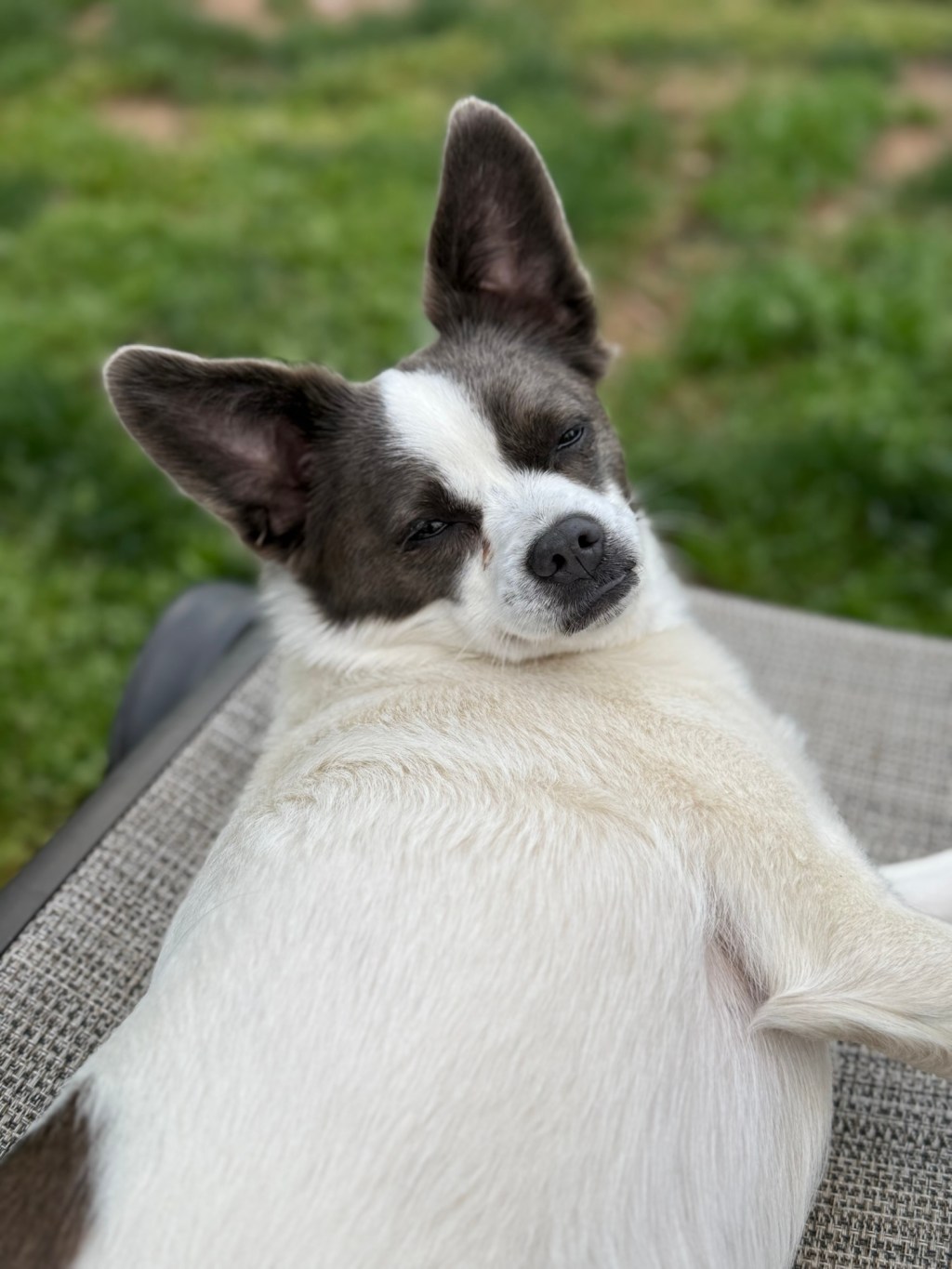
Let’s talk about man’s best friend. Or, as I like to call them: the four-legged freeloaders who steal our hearts, our snacks, and 90% of the bed. Yep—dogs.
But have you ever paused while kissing their adorable little forehead and thought, How did we get here? How did a wolf—an apex predator—turn into a toy-fetching, tail-chasing, baby-talking goober named Pickles?
Let’s take a sniff down memory lane and explore how the wild turned into the wiggly.
🐺 The Wolf That Said “What’s For Dinner?”
Around 20,000 to 40,000 years ago, something curious happened. A group of gray wolves started getting real comfy around human campsites. Not because they wanted hugs—but because they were hungry and humans tossed out some tasty leftovers.
According to archaeological and genetic evidence, these less-aggressive wolves eventually formed a kind of mutual agreement with us. We fed them scraps. They barked when danger was nearby. Win-win. The evolutionary term for this is “self-domestication”, where an animal species gradually becomes domesticated by associating with human environments (Morey, 2006; Freedman et al., 2014).
Basically, the chillest wolves stuck around—and those were the first steps toward the dogs we know today.
🐶 The First Doggos: Love at First Woof
By around 14,000 years ago, evidence of true dog burials starts popping up—like the Bonn-Oberkassel dog found buried with humans in Germany, clearly loved enough to earn a final resting spot beside its people (Morey, 2006).
This wasn’t just a scavenger anymore. This was a companion.
And as humans spread across the globe, so did dogs—adapting and evolving alongside us. Over time, we began selectively breeding them for traits we liked: hunting, herding, guarding, snuggling. This gave rise to different types of dogs in different regions, all with specific jobs.
🎩 Breed Frenzy: From Working Pups to Fluff Accessories
Fast forward to the Victorian era, and everything changed. Breeding became less about function and more about form. Royals, aristocrats, and soon the general public began showing dogs, breeding them for looks, and giving them fancier names than half the kids on Instagram today.
Kennel clubs formed, breed standards were created, and suddenly we had more dog breeds than we knew what to do with. Pugs, Pomeranians, and Poodles—oh my! But all that selective breeding came at a cost, sometimes concentrating genetic disorders (Parker et al., 2017).
Still, this is when dogs really transitioned into family members and fashion statements—and the cuddly couch-dwellers we adore today.
🧬 Science, DNA & The Mutty Future
Modern science has let us really dig into the doggie DNA. We now know that all domestic dogs (Canis familiaris) share a common ancestor with gray wolves, and that despite their differences in size, coat, and personality, they’re all the same species (Freedman et al., 2014; vonHoldt et al., 2010).
We also have doggie DNA tests now, which let you discover your rescue mutt is part beagle, part husky, and 100% chaos gremlin.
Oh—and yes, dog cloning is now a real thing. (If that feels like playing God, you’re not alone. Woof.)
❤️ Where We Are Now: Snuggles Over Survival
Dogs are no longer guarding livestock or tracking boar for dinner (well, most of them). They’re snuggling in our beds, getting their own birthday cakes, and starring in TikToks. They’ve gone from fierce forest predators to spoiled children with better wardrobes than I had in 1992.
But maybe that’s what makes this bond so beautiful. We’ve grown together. They’ve evolved to read our faces, match our emotions, and steal our popcorn. And in return, we’ve given them love, loyalty, and chew toys that cost $17.99.
🐾 My dogs
Jenny is a rescue baby and thinks she’s a queen, and Dolly? Well… she’s more of a court jester. But both of them carry the tiniest flicker of wild wolf spirit—usually when they hear the crinkling of a cheese wrapper.
They may not track deer or guard sheep, but they guard my heart every single day. Dogs evolved from wolves, sure—but I think we evolved into better people because of them.
📚 References:
Freedman, A. H., et al. (2014). Genome sequencing highlights the dynamic early history of dogs. PLoS Genetics. https://doi.org/10.1371/journal.pgen.1004016 Morey, D. F. (2006). Burying key evidence: the social bond between dogs and people. Journal of Archaeological Science, 33(2), 158–175. Parker, H. G., Dreger, D. L., Rimbault, M., Davis, B. W., Mullen, A. B., Carpintero-Ramirez, G., & Ostrander, E. A. (2017). Genomic Analyses Reveal the Influence of Geographic Origin, Migration, and Hybridization on Modern Dog Breed Development. Cell Reports, 19(4), 697–708. https://doi.org/10.1016/j.celrep.2017.03.079 vonHoldt, B. M., et al. (2010). Genome-wide SNP and haplotype analyses reveal a rich history underlying dog domestication. Nature, 464(7290), 898–902. https://doi.org/10.1038/nature08837

Leave a comment